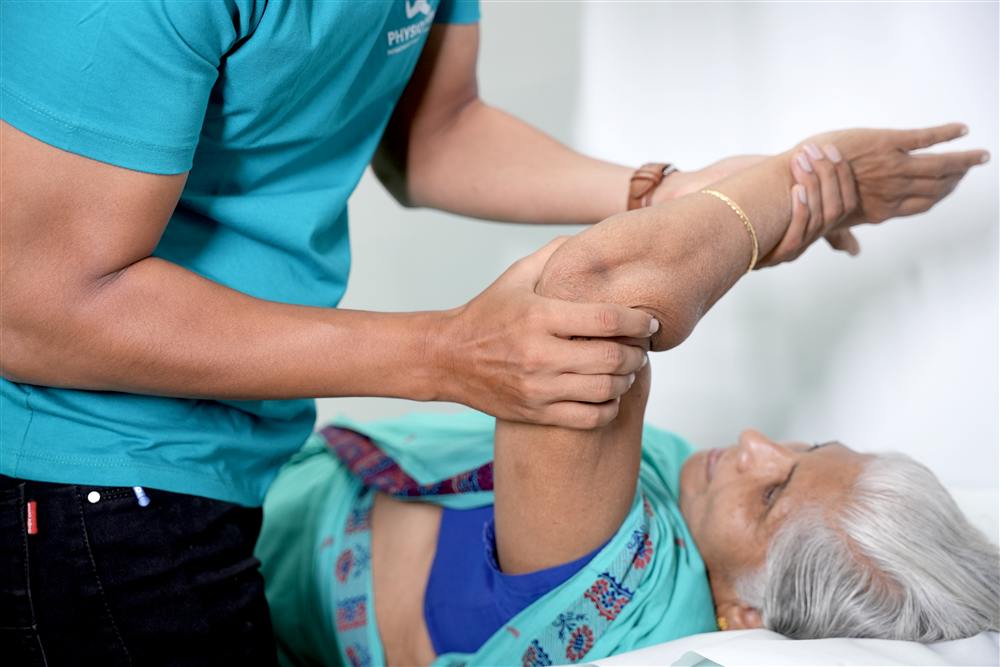
1. Understanding Breast Cancer Surgery
Breast cancer treatment may include:
- Lumpectomy (removal of the lump)
- Mastectomy (removal of the breast)
- Sentinel lymph node biopsy
- Axillary lymph node dissection
- Breast reconstruction
These procedures can affect the shoulder, chest, arm, and lymphatic system. Physiotherapy helps you recover movement, reduce pain, prevent complications, and return to normal daily activities safely.
2. Major Problems after Breast Cancer Surgery
A. Shoulder and Arm Problems
- Reduced shoulder movement (difficulty lifting the arm)
- Tightness in the chest and under the arm
- Pain or pulling sensation in the armpit or chest area
- Weakness in the shoulder muscles
- Difficulty with daily tasks (combing hair, reaching overhead)
B. Post-surgical Effects
- Scar tightness
- Swelling or stiffness around the incision
- Poor posture from pain and guarding
- Tiredness and reduced stamina
- Nerve discomfort or numbness
C. Risk of Lymphedema
Lymphedema = swelling of the arm due to buildup of lymph fluid after lymph nodes are removed or damaged. Signs include:
- Swelling in hand/arm/chest
- Feeling of heaviness or tightness
- Skin feeling thick or tight
- Rings or sleeves feeling tighter
Early physiotherapy reduces this risk significantly.
3. How Physiotherapy Helps After Breast Cancer Surgery
Physiotherapy focuses on safe recovery, regaining movement, and preventing complications. It is usually started a few days to weeks after surgery depending on your doctor's advice.
4. What Physiotherapy Involves
A. Shoulder Rehabilitation
Helps restore movement, strength, posture, and function.
- Gentle Mobility Exercises — these help reduce stiffness and improve range of motion.
- Stretching — these reduce tightness and help you move more freely.
- Strengthening — strengthening improves posture, reduces pain, and supports the shoulder.
- Posture Training
B. Lymphedema Prevention & Management
1. Manual Lymphatic Drainage (MLD) — a very gentle, specialized technique that helps:
- Move lymph fluid
- Reduce swelling
- Prevent buildup
Only trained physiotherapists should perform this.
2. Compression Therapy — may include:
- Compression sleeves
- Bandaging
- Special garments
These help control swelling and support lymphatic flow.
3. Lymphatic Exercises — slow, rhythmic movements that:
- Improve fluid circulation
- Reduce swelling
- Keep the arm flexible
4. Aerobic exercise training — exercises such as treadmill training and cycling with tailored intensity for each patient individually to reduce tiredness and improve endurance.
5. Monitoring and Early Detection — regular measurement of arm circumference ensures early treatment, which is the key to preventing chronic lymphedema.
5. How Physiotherapy Works
Physiotherapy helps by:
- Improving joint movement and preventing stiffness
- Reducing pain and scar tightness
- Supporting lymph flow to prevent swelling
- Strengthening muscles for posture and daily tasks
- Speeding healing and improving independence
- Reducing long-term complications, including frozen shoulder and chronic lymphedema
- Improving quality of life and confidence after surgery
6. When to Contact Your Physiotherapist
Seek help if you notice:
- Increasing swelling in the arm or hand
- Difficulty raising the arm
- Tightness around the scar
- Pulling sensations that do not reduce
- Shoulder or back pain
- Tingling, heaviness, or numbness
- Fatigue that affects daily function
Recovery is a gradual process — be patient and consistent. Physiotherapy will help you regain movement, reduce swelling risks, and return to everyday life confidently and safely.